Where to stay · Tokyo
Where to Stay in Tokyo: Shinjuku, Asakusa or Another Base?
Neon nights or temple streets? Choose the Tokyo you want to come home to, then compare five bases, station routes and three hotel examples.
11 min read
Choose the Tokyo you want to come home to
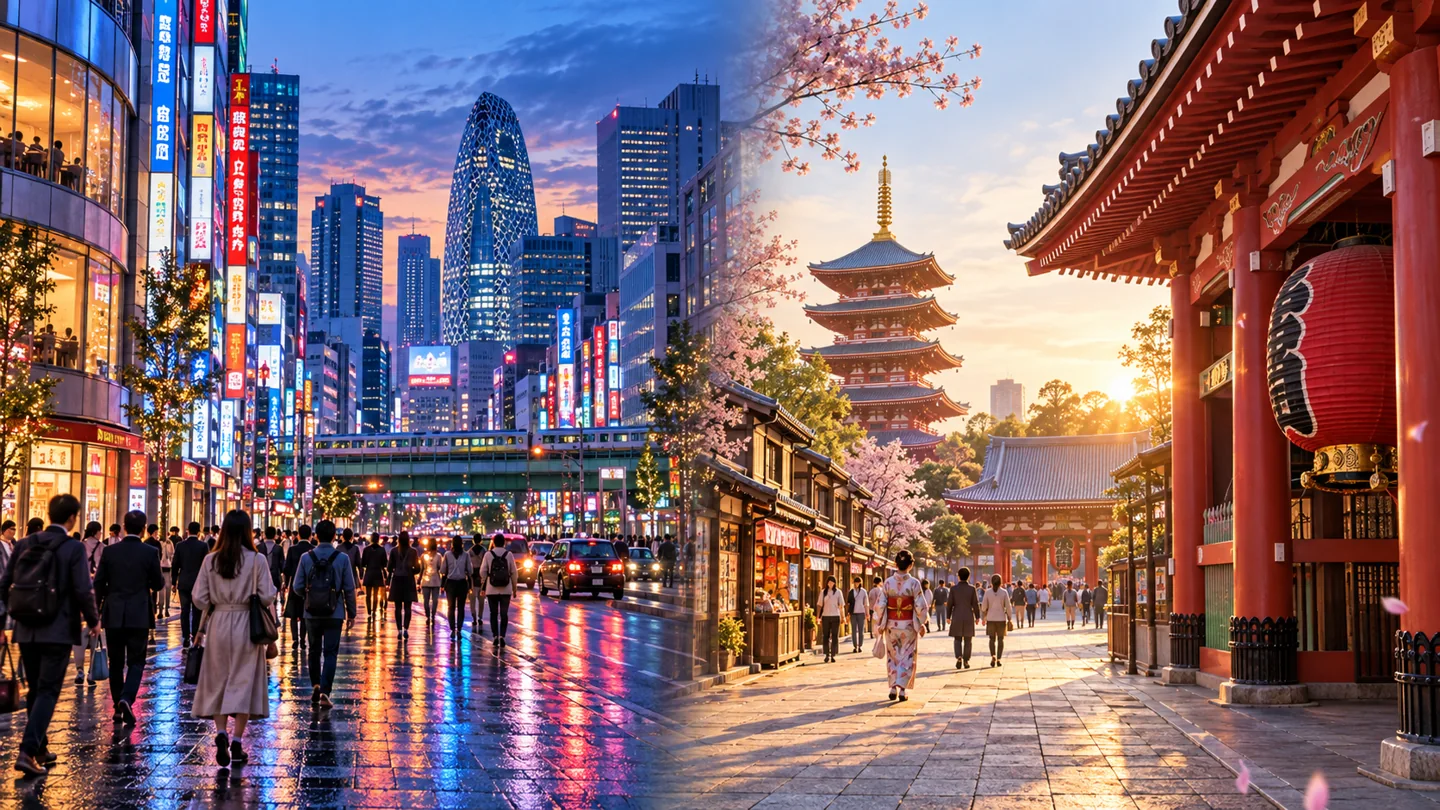
You can spend the afternoon beneath the trees and the evening under neon signs on the same Tokyo trip. Your hotel base decides which part happens effortlessly—and which part means another journey when your feet are tired.
For a first visit built around lively evenings and exploring the western side of Tokyo, start with Shinjuku. For a trip where Senso-ji, old shopping streets and riverside walks are the draw, start with Asakusa. Shibuya, Ueno and Tokyo Station solve different problems; the table below helps you see whether one fits better.
These are researched recommendations, not claims that we have stayed in every neighborhood or hotel. Start with the moments you want most, then choose the station and room that support them.
Five bases, five different trips
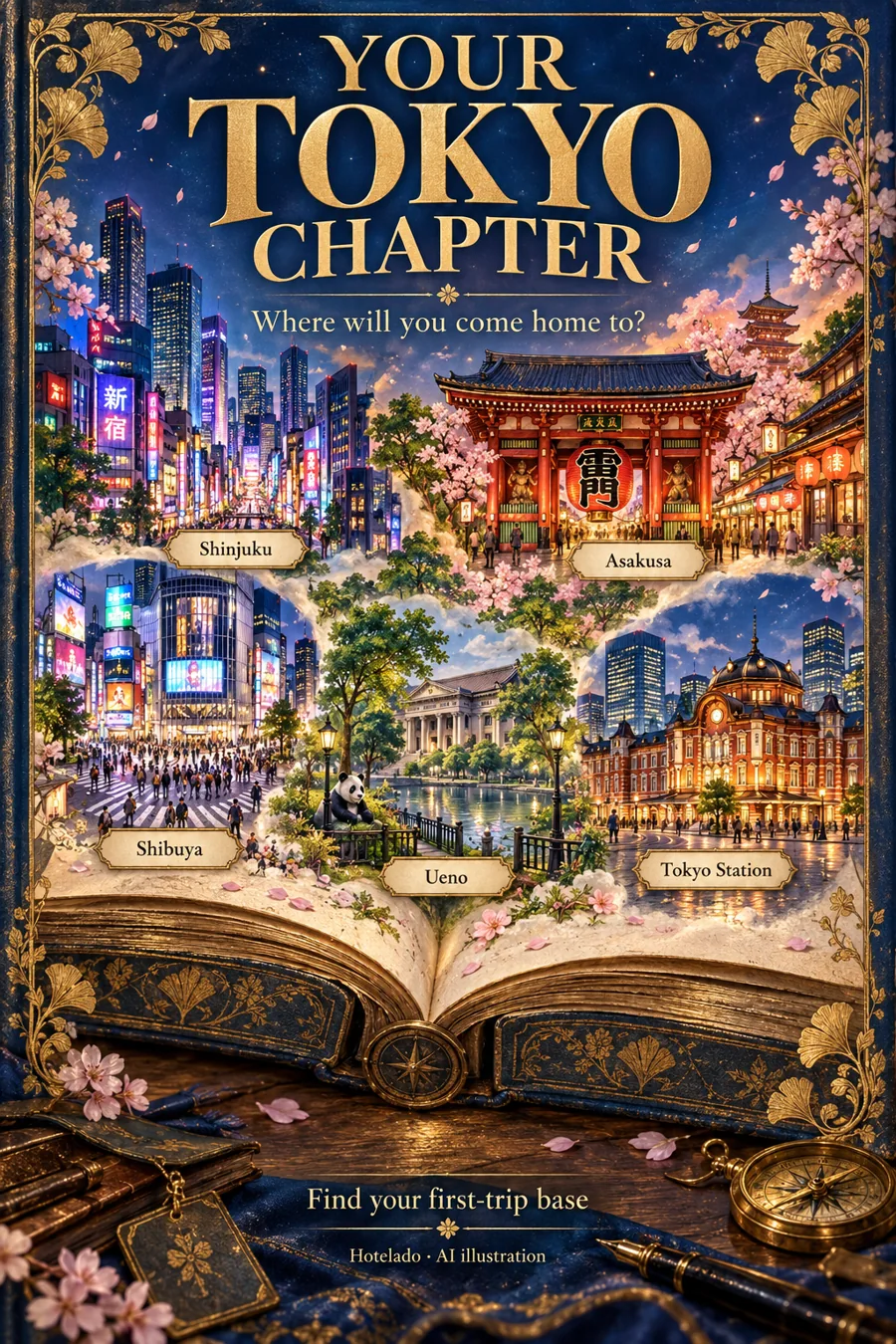
Choose two contenders from this table. Then compare actual hotel addresses, rather than assuming every property with the neighborhood name has the same location. “Best” depends on the trip you have planned.
| Base | Choose it for | The tradeoff | Check the hotel’s position |
|---|---|---|---|
| Shinjuku | Evening energy and western Tokyo outings | A large station and very different east/west surroundings | Which station exit and which side of the tracks? |
| Asakusa | Senso-ji, traditional shopping streets and river walks | Repeated western Tokyo evenings mean more cross-city journeys | Which Asakusa station and which line? |
| Shibuya | Fashion, cafés and a contemporary city atmosphere | Busy streets and a complex station approach | Walking route, hills and nearby nightlife |
| Ueno | Museums, park time and Narita arrival via Keisei | The park side and market streets feel different | JR Ueno or Keisei-Ueno for your journey? |
| Tokyo Station | Onward rail travel and Marunouchi walks | Convenient trains do not make it the right nightlife base | Marunouchi, Yaesu or Nihombashi exit? |
Official details: JNTO: Shinjuku · JNTO: Asakusa · GO TOKYO: Shibuya · GO TOKYO: Ueno · GO TOKYO: Tokyo Station and Marunouchi
Shinjuku vs Asakusa: make the evening test
Imagine your last hour of sightseeing. Do you want to head toward bright streets, find dinner and keep wandering near your hotel? Or would you rather return to a neighborhood whose main attraction is a temple district and its surrounding streets? That is a more revealing question than which area looks closest to the center of a map.
Pick Shinjuku if your evenings repeatedly point west. Pick Asakusa if its atmosphere is one of the reasons you are coming to Tokyo. You can visit both from either base; the difference is how often you make that journey. Mark your three most important stops, plus two likely dinner areas, before deciding.
Asakusa is not an empty, silent alternative: Senso-ji draws visitors, Nakamise is a shopping destination and the area also has bars. Likewise, Shinjuku is not one continuous nightclub street. A hotel among the western office towers creates a different home base from a property near eastern nightlife. Choose a specific street, not a stereotype.
| Your trip sounds like… | Start here | Why |
|---|---|---|
| Shopping and western Tokyo days, then dinner near the hotel | Shinjuku | Your base follows the repeated part of your itinerary |
| Temple streets, river walks and an unhurried eastern Tokyo day | Asakusa | The neighborhood itself becomes part of the stay |
| One packed night in Shinjuku, mostly museums and temple visits otherwise | Asakusa or Ueno | A single evening does not have to decide the whole trip |
Official details: JNTO: Shinjuku · JNTO: Asakusa
Shinjuku: for the traveler who wants another hour outside
Shinjuku earns its place on a first-trip shortlist through variety: shopping, evening streets, major rail connections and the green break of Shinjuku Gyoen. It works especially well when you want your hotel to be a launch point for western Tokyo rather than a retreat far from the action.
The practical choice is east versus west. The western high-rise district is worth checking for a conventional hotel base; eastern streets deserve a closer look when nightlife is the attraction. Neither label guarantees a quiet room. Use the property’s precise map pin and recent location feedback to understand the block.
Before booking, trace the route from the exit you will actually use. A short line on a map can conceal a long station passage or an inconvenient crossing. Save the hotel’s access page before arrival so “Shinjuku Station” becomes a clear route, not just a large destination.
Official details: JNTO: Shinjuku
Asakusa: let the neighborhood be part of the holiday
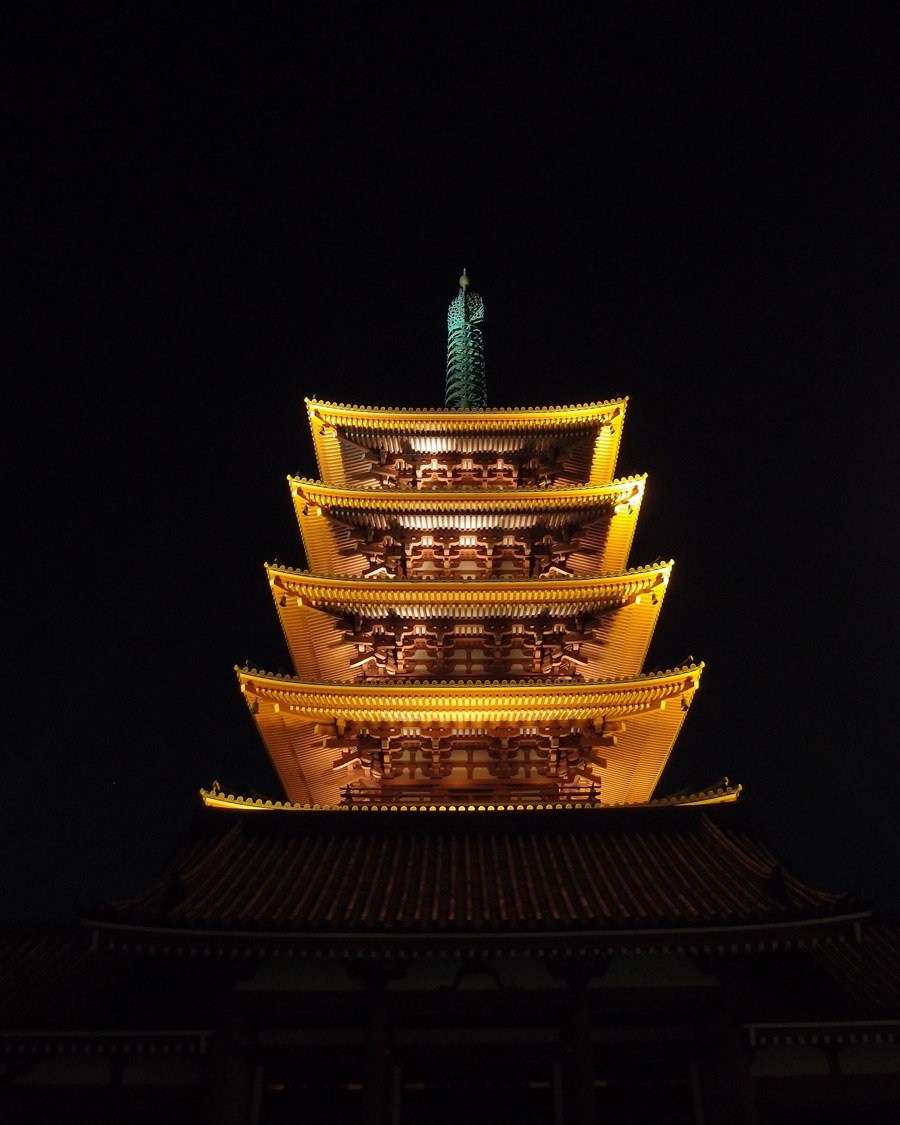
Senso-ji and Nakamise give Asakusa a distinctive reason to stay. Add the Sumida riverside and views toward Tokyo Skytree, and the area suits travelers who want familiar streets to return to between outings. Rather than treating it as a quick photograph stop, leave a stretch of your schedule open for exploring the surrounding district.
The catch is repetition. If your plans keep taking you toward Shinjuku and Shibuya, compare those journeys before choosing an eastern base. Asakusa can still be the right choice, but its character should be worth the travel to you.
Be precise about the station: the Ginza, Toei Asakusa and Tobu lines serve the Asakusa area, while the Tsukuba Express station is a separate location. A hotel’s access directions can show quite different walking times depending on the line. Temple interiors and shopping hours also differ from an evening view of the neighborhood; plan visits around current opening information.
Official details: JNTO: Asakusa · The Gate Hotel Kaminarimon: official access directions
Shibuya: for fashion, cafés and a city-first itinerary
If the scramble crossing is only the beginning of your Tokyo wish list, Shibuya may fit better than Shinjuku. Fashion shops, art, cafés and restaurants make it a strong contender when you want contemporary city culture woven into the day. It is also served by JR and several private railway and Metro lines.
Choose it because the surrounding area matches your plans, not simply because the station is famous. Check the final walk to the hotel with luggage, the street’s evening activity and the room’s position within the building. A property that feels convenient on a sightseeing stroll can feel different at the end of an arrival day.
For travelers deciding between Shinjuku and Shibuya, put the two hotel addresses into the same planned day. If most of your bookmarked stops and dinners are around Shibuya, a broad “Shinjuku is best for first timers” recommendation should not outweigh your own itinerary.
Official details: GO TOKYO: Shibuya
Ueno: build the stay around a museum-and-market day
Ueno offers an appealing combination: spacious park grounds and museums on one side, Ameyoko’s lively market streets on another. It is a useful shortlist option for a trip with cultural outings and eastern Tokyo exploration. Families can consider it when park time is a priority, while still checking room space and bedding rather than assuming every local hotel suits children.
Narita travelers should compare the Keisei-Ueno arrival route with their hotel’s actual location. Keisei’s airport station information covers both Keisei-Ueno and Nippori; JR Ueno is a different station facility. The convenient arrival is the one that ends near your hotel entrance.
A good way to test Ueno is to sketch one deliberately local day: a museum visit, time in the park and a wander through the market streets. If that sounds like part of your ideal holiday rather than a compromise, it deserves a place beside the more famous western bases.
Official details: GO TOKYO: Ueno · Keisei: airport station and transfer information
Tokyo Station: choose it for the journey after Tokyo
Tokyo Station becomes especially compelling when the trip continues by rail. Marunouchi lies to the west, with the red-brick station building, office towers and streets leading toward the Imperial Palace. Yaesu lies to the east. The station itself has shopping and dining, so a transport-focused stay need not feel like a stopover.
The exit is the decision. “Near Tokyo Station” can describe properties on different sides of a large complex. Match the hotel to your arriving service and your onward train, and read its directions before you buy convenience on the strength of a map label.
Choose this base when simple onward travel and central walks matter more than ending most nights in Shinjuku or Shibuya. For a very short Tokyo stop between destinations, avoiding a hotel move can be more valuable than collecting another neighborhood experience.
Official details: GO TOKYO: Tokyo Station and Marunouchi
Two sample trips: see how the base changes the day
These are planning examples, not timed itineraries. They show how the same city can feel different depending on where your day begins and ends. Check opening times and routes for the actual dates you choose.
| Moment | Western city break | Eastern culture break |
|---|---|---|
| Morning | Start near Shinjuku; choose a garden or shopping outing | Begin with the Asakusa district before heading farther afield |
| Main outing | Group your Shibuya and western Tokyo interests together | Group Ueno’s museums and park interests together |
| Evening | Choose dinner in the district you want to keep exploring | Return toward Asakusa for the neighborhood atmosphere |
| Base to compare | Shinjuku or Shibuya | Asakusa or Ueno |
| Before committing | Can you walk home from your likely dinner area? | How often will you need to cross the city for other plans? |
Three hotel examples that make the choice concrete
These examples were matched to Hotelado’s catalog and checked against the hotels’ own access information. They illustrate three different bases; they are not a ranked claim about every Tokyo hotel, and we have not personally inspected their rooms. Open the property page with your dates to compare the actual room, total and cancellation terms.
Keio Plaza Hotel Tokyo — a candidate for a western Shinjuku base. Its official directions describe access from Shinjuku’s west exit and Tochomae. Compare this location with the eastern streets where you intend to spend your evenings; a Shinjuku address alone does not put you beside every nightlife spot.
The Gate Hotel Kaminarimon by Hulic — a candidate when the Asakusa district is the reason for your stay. Its access page gives separate directions for the Ginza, Toei Asakusa, Tobu and Tsukuba Express stations. For luggage or a stroller, also consult its FAQ’s elevator recommendations rather than choosing the shortest stair-based route.
Hotel Metropolitan Tokyo Marunouchi — a candidate for a Tokyo Station-focused stay. The hotel identifies a connection to the Nihombashi exit and access from Yaesu North Gate. That specific location is more useful than the general Marunouchi name when you plan arrival and departure.
Official details: Keio Plaza: official access directions · The Gate Hotel Kaminarimon: official access directions · The Gate Hotel Kaminarimon: luggage and elevator FAQ · Hotel Metropolitan Tokyo Marunouchi: official location
Make the arrival easy before you choose the room
For Narita arrivals, JR East lists Narita Express services to Tokyo, Shibuya and Shinjuku among its destinations. Keisei publishes airport station and transfer information for Keisei-Ueno and Nippori. Compare the departure that fits your arrival time, then the remaining walk or connection to your hotel. Do not assume every service serves every stop.
Use the current Metro map to see whether the routes you need are direct or involve a transfer. An airport connection is important, but on a longer stay your repeated sightseeing journeys may matter more. For a late arrival or early departure, check the actual operating timetable before settling on rail as your only plan.
- Save the hotel’s station exit, entrance and access directions—not only the nearest station name.
- Compare your airport route and two journeys you expect to repeat during the stay.
- Check stairs or elevator access if you have large luggage, a stroller or mobility needs.
- For a late evening across town, check the return service for that day before heading out.
Official details: JR East: Narita Express · Keisei: airport station and transfer information · Tokyo Metro: current subway map
Choose the room as carefully as the neighborhood
Once two bases remain, compare rooms on equal terms. A room name can hide an important difference: separate beds versus one bed, an extra sleeping place versus an extra room, or a view that is available only in some categories. For families, enter everyone’s ages and verify the selected offer’s occupancy instead of relying on the hotel name.
Keep the decision focused: usable room space, bed setup, the bathroom arrangement you need, and the full stay total. If noise sensitivity matters, read recent room-specific feedback and ask about the requested room category. A good neighborhood choice cannot make an unsuitable room fit.
Prices and availability change with dates and room categories. Use the guide to choose a base; use the current offer to decide whether a particular stay fits your budget and plans. The illustrations convey imagined neighborhood moods; the credited destination photograph shows Asakusa. Neither depicts the rooms of the three hotel examples.
The questions that usually settle the shortlist
Which area would we shortlist first? Shinjuku for a first visit centered on lively evenings and western Tokyo; Asakusa when temple streets and eastern exploration are a central attraction. If neither describes your plans, use the five-base table rather than forcing the choice.
Is Asakusa too far away? Not automatically. The useful question is how often your own itinerary takes you elsewhere. Compare the actual routes from your hotel, including the final walk; a district-level answer cannot settle that for everyone.
Should you change hotels halfway through Tokyo? Consider it only when the two stays serve distinct plans. For a short visit, packing, checkout and carrying luggage can use up the time you hoped to save. Start by testing whether one well-positioned base covers the trip.
How do you choose between two similar hotels? Keep the dates, guests and cancellation terms the same, then compare the door-to-door route and selected room. That makes a small price difference easier to judge than a comparison of two neighborhood labels.
Your next step: one shortlist, not twenty open tabs
Write down the evening you most want, the outing you will repeat and the airport or onward journey you need. Choose two bases from the table. Then open a hotel in each, trace the route and compare the same room requirements.
If both still work, choose the neighborhood you are excited to return to. That is the part of the holiday a hotel map pin cannot decide for you. Save this guide while planning, then explore Tokyo stays with your own dates.
Sources & editorial notes
Destination facts are checked against the sources below. Hotel and room details should be verified on the offer you select.
- JNTO: Shinjuku
- JNTO: Asakusa
- GO TOKYO: Shibuya
- GO TOKYO: Ueno
- GO TOKYO: Tokyo Station and Marunouchi
- JR East: Narita Express
- Keisei: airport station and transfer information
- Tokyo Metro: current subway map
- Keio Plaza: official access directions
- The Gate Hotel Kaminarimon: official access directions
- The Gate Hotel Kaminarimon: luggage and elevator FAQ
- Hotel Metropolitan Tokyo Marunouchi: official location
Find your stay
Compare hotels in Tokyo
Choose your dates and guests to see available room offers.